Beastly Beats is a medieval rhythm game boss fight against a tyrannical evil Cat King, where the animals are the instruments played to liberate music in the story book realm.
Overview
Beastly Beats began with a simple question: what if music could be used as a form of resistance?
Every song becomes a boss fight against the Evil Cat King, who is trying to silence music in the storybook world. But players step into the book to help the animals create music without their instruments.
My Role:
Design Lead, Lead Engineer…. Combat Designer?
Throughout working on Beastly Beats, I was the primary owner of the gameplay design and anything digital. The game started as a narrative antagonist in the background of the traditional rhythm gameplay, and the controllers acted as the main way the game was different from our reference games like Guitar Hero.
But the Evil Cat King felt like more than a glorified set piece, and thus, our medieval rhythm game made the transition to a boss fight each song.
Cat Events
Darkness
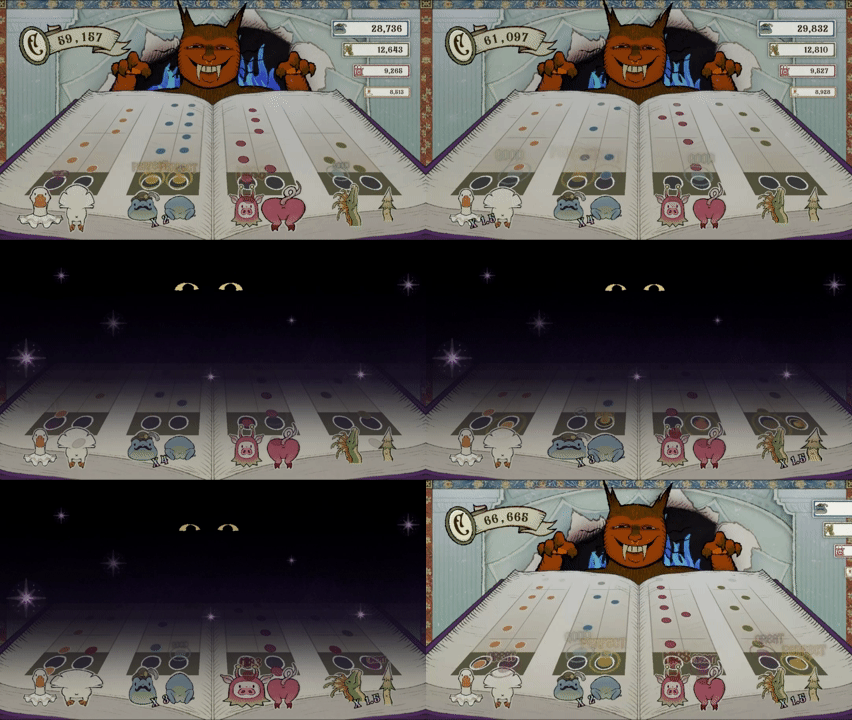
Covering the incoming notes with darkness lets us tie in with a smoke machine that also hides the notes from the player physically, too.
Rock the Stage
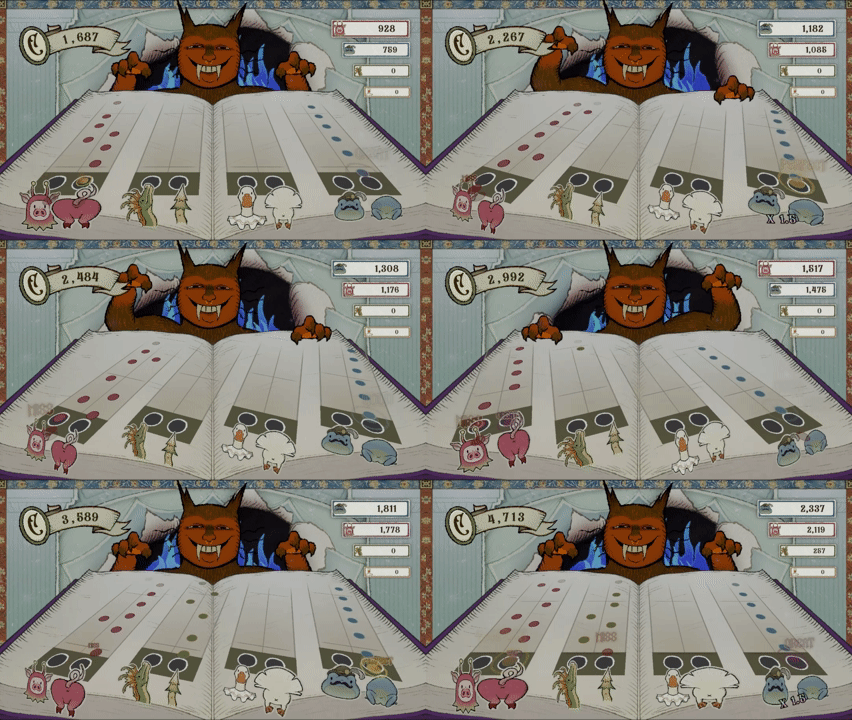
Rocking the stage sets off rumble motors on the stage at the same time. The easiest event for the musicians on stage to work with; it provides an introduction to the Cat King’s meddling.
Swap Places
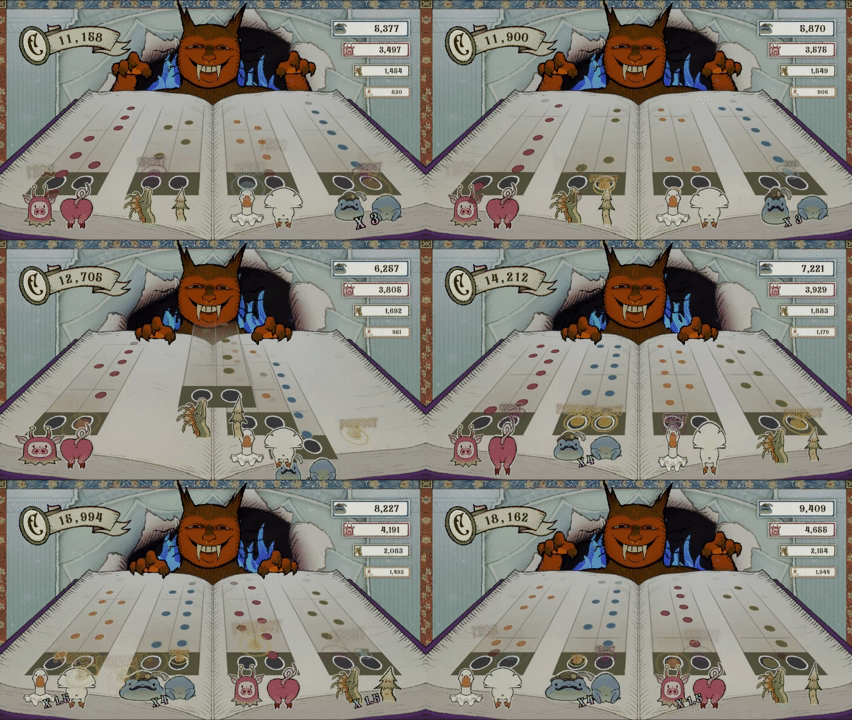
There is no “Player 1” in Beastly Beats, and that becomes apparent once the Cat King starts shuffling the Note Tracks around on the pages of the storybook. No longer able to stay locked in on just your corner of the screen, it brings the players together as their boards travel across the page.
Book Flip
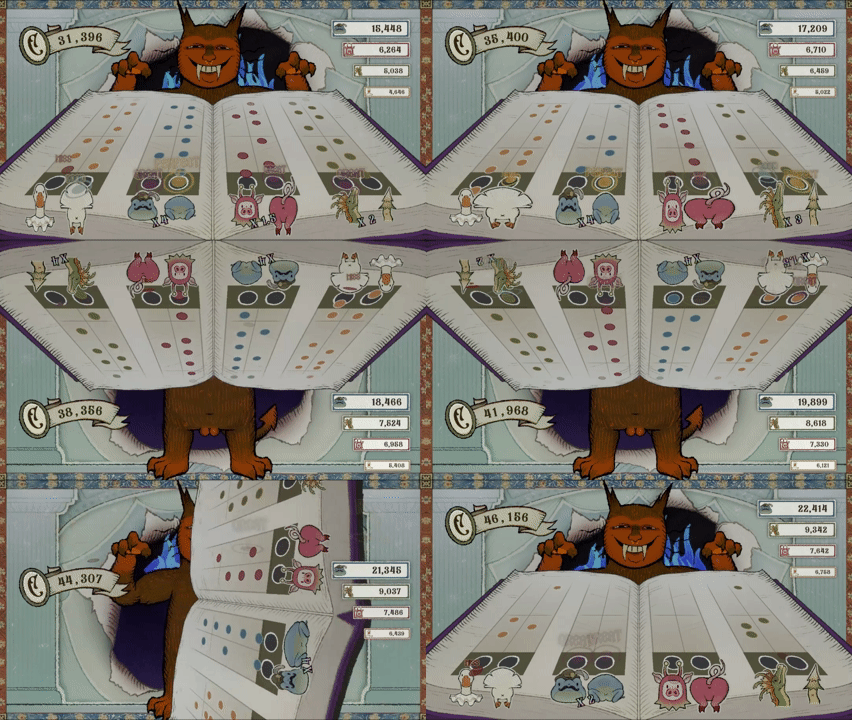
The audible reactions from players the first time they play a song and the entire book slips upside down made this event almost mandatory in each song. However, this event adds the greatest level of difficulty to the song.
Difficulty
The various Cat Events work together with the spread of notes to make a “HARD” song about more than just how many notes play in the given time. When your notes are upside down or shrouded by darkness, hitting those notes becomes increasingly difficult.
Narrative
Players begin as observers, watching the band perform as if reading a fairy tale. When the Cat King destroys the animals' instruments, the story appears headed for a tragic ending. At this turning point, players break the fourth wall and step into the story, physically interacting with the animals to help them become living instruments and continue the music themselves.
The players fight back against the Cat King, touring across the Storybook kingdom to engage the audience and restore music to their land.
Stage and the Audience
The Stage is more than just a prop; it’s built into the core of the gameplay. It interacts with Cat Events in different ways and allows the players to face their audience, just like a proper concert.
And the audience is baked into the core of the gameplay. A panning camera brings the audience into the game, and Cheer Events within the song require the players to “Get Ye Crowd Loud” and measure how loud they get, awarding the players extra score to reach a victory state against the cat and pelting him with a tomato. But if the players fail to get their crowd loud, they are the ones trying to play notes with a tomato blocking their screen.